The One-In, One-Out Rule: Does It Actually Work?
You’ve probably heard this organizing rule before:
Every time something new comes into your home, something else has to go.
Buy a new sweater? Donate an old one.
Your child gets a new toy? Choose one they’ve outgrown.
New coffee mug? Goodbye to the mug you haven't reached for since 2019.
It sounds great in theory—but does the one-in, one-out rule actually work in real life?
Sometimes, yes. But we don’t think it needs to be quite so literal.
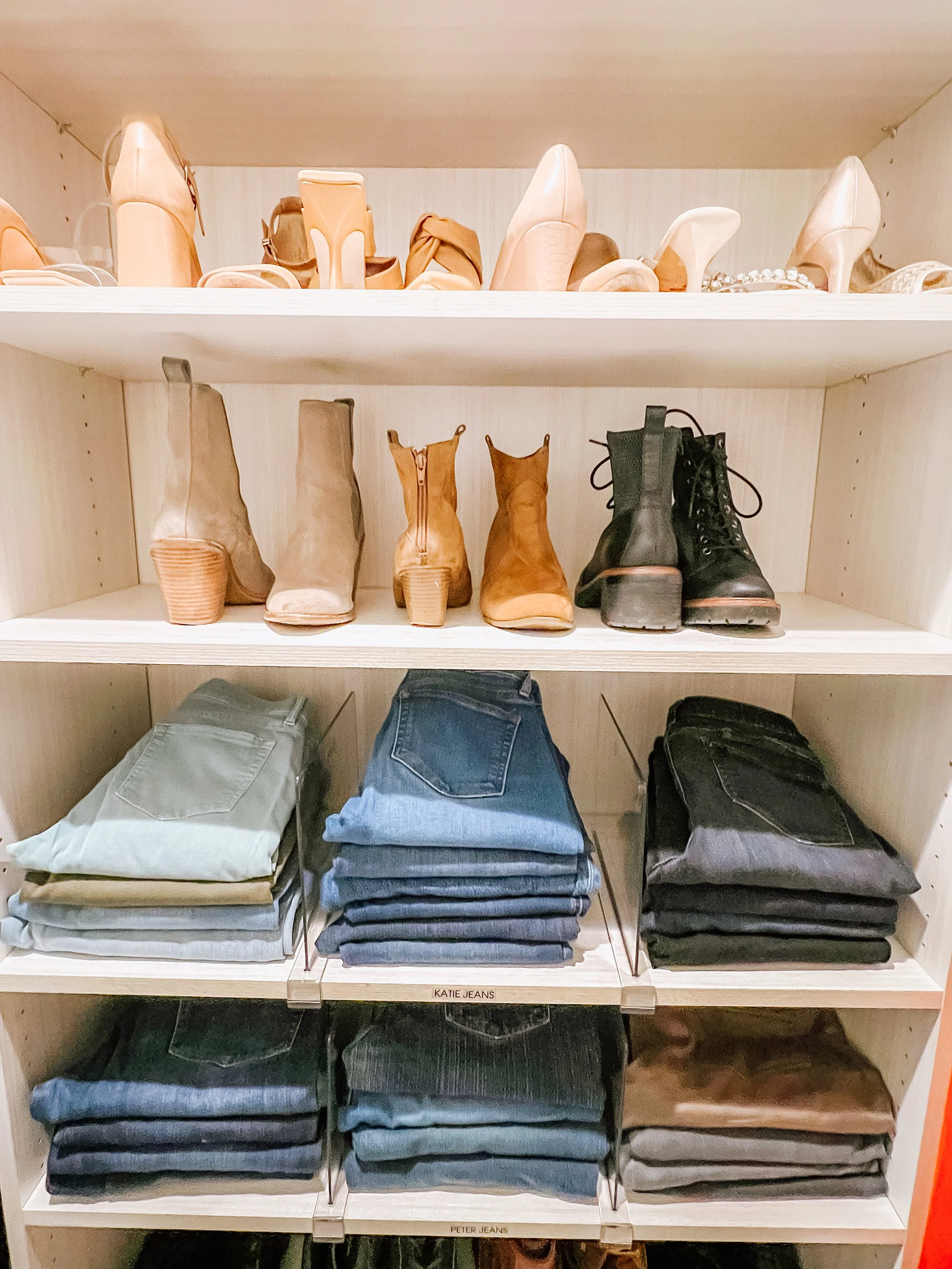
Where the Rule Works Really Well
One-in, one-out can be incredibly helpful in categories that tend to grow without us noticing.
Think:
Clothes and shoes
Toys
Beauty products
Water bottles and travel mugs
Kitchen gadgets
Books
Linens
If the space you’ve designated for something is already full, bringing in more without removing anything eventually creates clutter.
The rule gives you a simple pause before adding another item.
But It Doesn't Have to Be an Exact Trade
You bought one shirt, so now you must get rid of exactly one shirt?
Not necessarily.
Maybe you genuinely needed that shirt. Maybe your wardrobe has plenty of room. Maybe you recently donated ten things and are intentionally replacing a few pieces.
Organizing rules should make your home easier to live in—not make you feel guilty every time you buy something.
Instead of thinking “one thing came in, so one thing must go,” try asking:
Do I have space for this?
That question gets to the heart of what the rule is trying to accomplish.
Use the Container as Your Limit
One of the easiest ways to know when it’s time to edit a category is to let the space itself tell you.
If your shoe rack comfortably holds 15 pairs of shoes and you buy another pair, take a look at what's already there.
Is there a pair you never wear? One that's uncomfortable? Something worn out?
If everything fits comfortably, great. If you're suddenly stacking shoes on the floor because the rack is overflowing, that's your cue to make some decisions.
The same idea works for toy bins, dresser drawers, kitchen cabinets, bookshelves, and bathroom storage.
Be Especially Mindful During High-Intake Seasons
Birthdays, back-to-school season, and the holidays can bring a lot into the house at once.
This is where the spirit of one-in, one-out can be really helpful.
Before adding all the new things, take a quick look at what your family already owns. What has been outgrown? What isn't being used? What are you ready to pass along?
You’re making room—not just physically, but for the things you actually want to use and enjoy.
The Goal Isn't a Perfect Item Count
We don't think anyone needs to stand at the front door keeping score:
One Amazon package came in, better find something to donate.
The real value of the one-in, one-out rule is that it encourages you to notice what you're bringing into your home.
Your home has a finite amount of space. When you become more intentional about what comes in—and regularly let go of what no longer serves you—maintaining your organizing systems gets a whole lot easier.
And that’s a rule we can get behind.