How to Organize Kids’ Spaces Without Making Them Feel Sterile
If you’ve ever looked at a beautifully organized kids’ room online and thought, This would never work in my house, you’re not alone.
Kids’ spaces are meant to be lived in. They should support play, creativity, and everyday mess — not feel like a showroom that can’t be touched. Organization doesn’t have to mean stripping a room of color or personality. In fact, the most successful kids’ spaces are the ones that feel warm, flexible, and easy to maintain.
Here’s how to organize kids’ spaces in a way that feels realistic for real families.
Let Kids See (and Access) Their Things
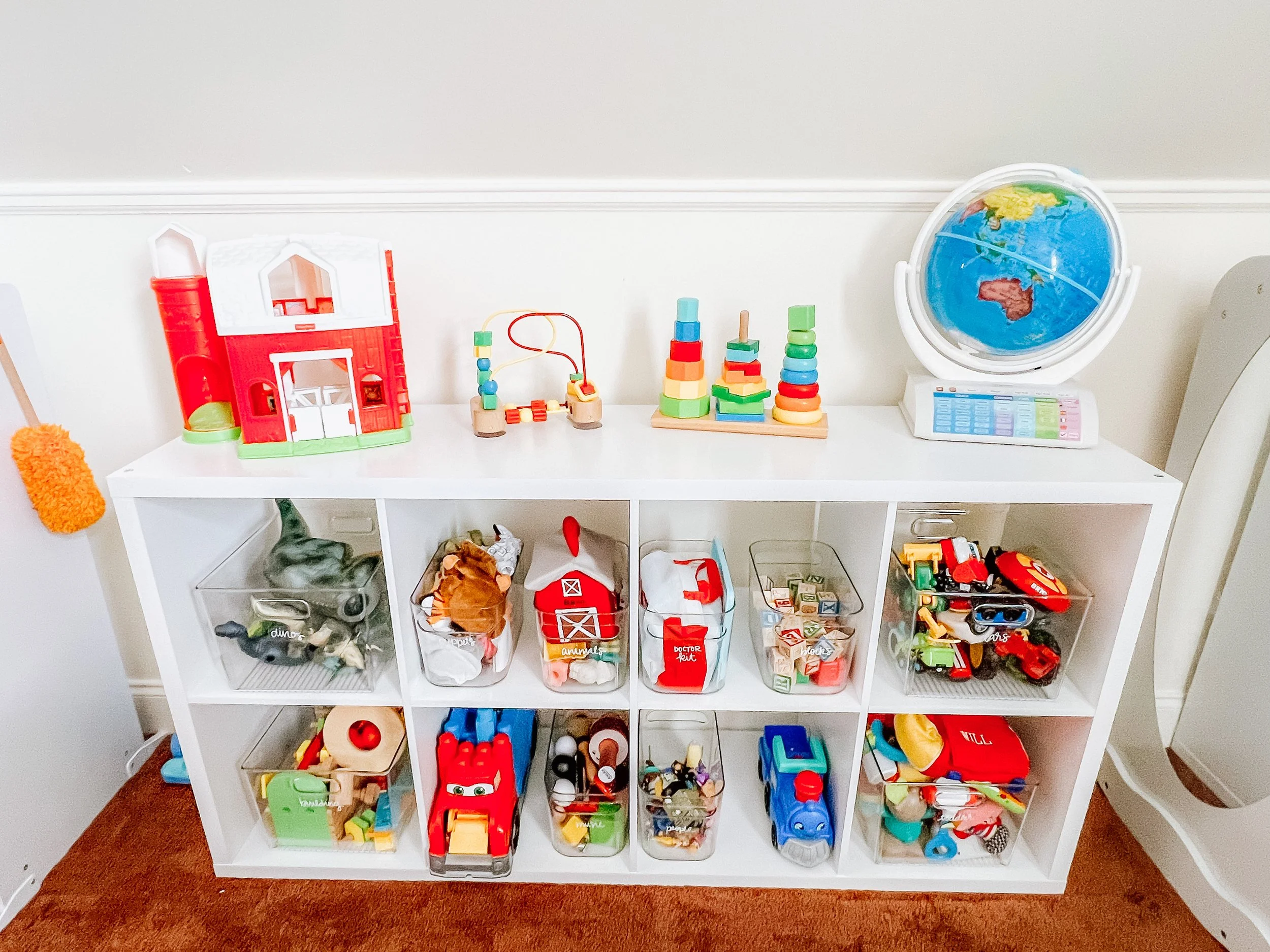
One of the biggest mistakes we see in kids’ rooms is overusing closed storage. When everything is hidden away, kids forget what they own — and clean-up becomes harder, not easier.
Instead:
Use low shelves so kids can grab and return toys independently
Keep favorite items visible
Rotate toys seasonally instead of storing everything at once
When kids can see their toys, they’re more likely to engage with them — and put them back when they’re done.
Color, Play, and Personality Still Matter
Organization doesn’t have to mean neutral bins and empty shelves. Kids connect to spaces that reflect them.
That might look like:
Colorful bins or labels
Open shelves with books facing out
Displaying LEGO builds, artwork, or collections
Mixing practical storage with playful decor
A room can be organized and still feel fun. In fact, when kids feel proud of their space, they’re more likely to help take care of it.
Create Systems That Grow With Your Kids
Kids’ needs change quickly, so their spaces should be able to change with them.
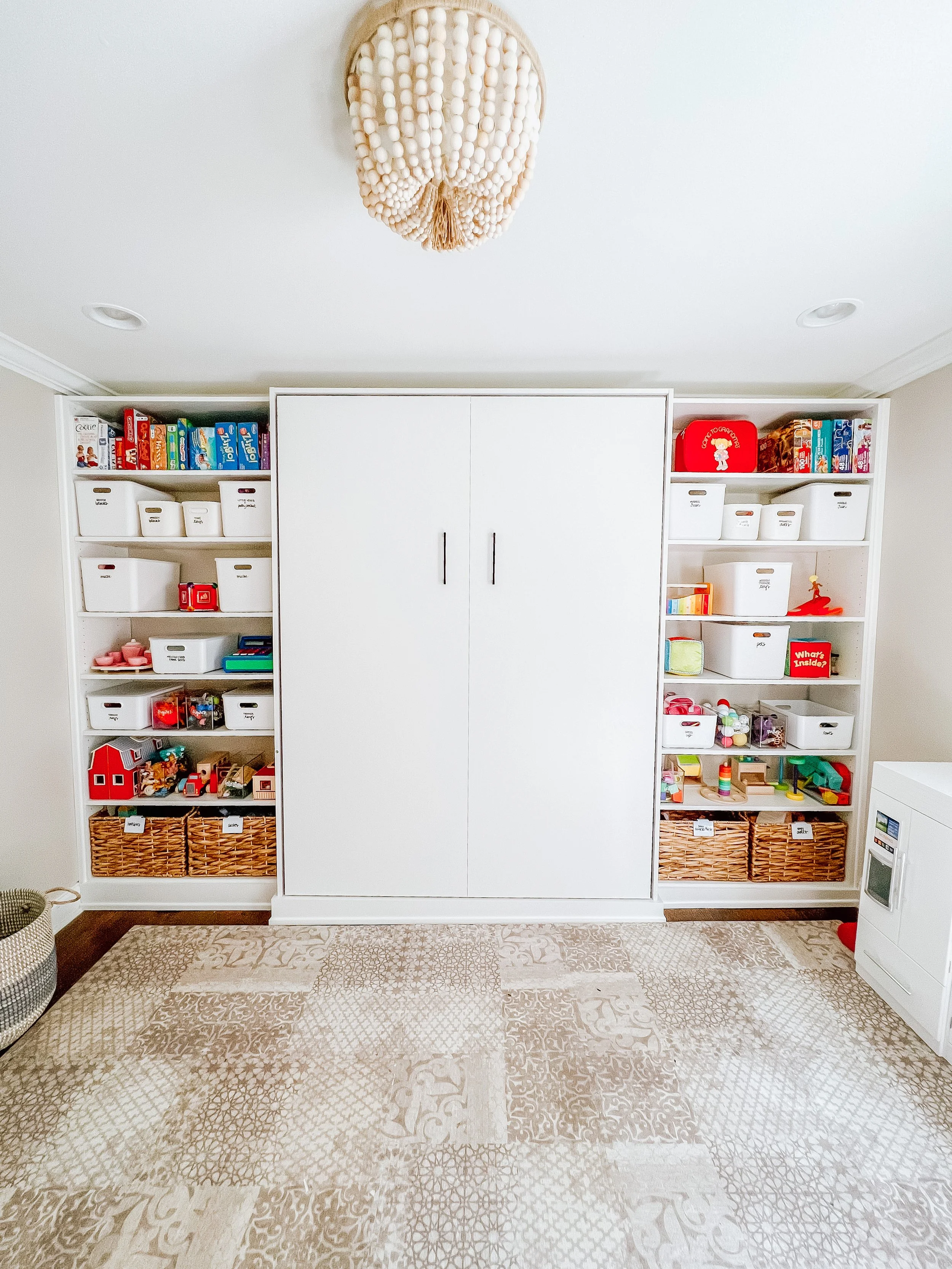
A few ways to future-proof organization:
Use bins and labels that can be easily swapped
Keep categories broad instead of overly specific
Choose furniture and storage that works for multiple stages
A bin labeled Toys can become Games later. A shelf that holds picture books can eventually hold chapter books. Flexible systems save time, money, and frustration in the long run.
Set Realistic Expectations for Everyday Life
This is the most important part: kids’ spaces will never look perfect all the time — and that’s okay.
A realistic goal:
Toys are easy to find
Clean-up doesn’t feel overwhelming
Systems can be reset quickly
Instead of aiming for picture-perfect rooms, aim for spaces that can be tidied in 10–15 minutes. That’s what makes organization sustainable.
A Final Reminder
Organizing kids’ spaces isn’t about control or perfection. It’s about creating a home that supports play, learning, and everyday life — without adding more stress to your plate.
If your systems work most of the time, you’re doing it right.